Choosing and Using a Leather Awl
Quick answer: A leather awl opens stitch holes cleanly so a needle and thread can pass through. It is used alongside a pricking iron — the iron marks the position and spacing, the awl opens each hole fully just before stitching. A diamond awl blade is the standard choice for saddle stitching on vegetable-tanned leather. It must be kept sharp to part leather fibres cleanly rather than tearing them.
An awl is a straightforward tool with a specific job: opening holes in leather cleanly so that a needle and thread can pass through. It is used alongside the pricking iron — the iron marks the position and spacing, the awl opens the hole fully. Understanding how to choose and use one properly makes a significant difference to the quality of hand stitching.
Awl blade shapes
The most common awl blade for hand leatherwork is the diamond awl, which has a tapered, lozenge-shaped blade. When pushed through the leather, it opens a clean elongated hole rather than a round puncture. This shape suits saddle stitching because the thread fills the elongated slot neatly, and the stitch lies flat across the surface.
The blade profile should be consistent from tip to shoulder, with a gradual taper. A blade that widens too abruptly near the handle will force the leather open further than necessary and leave a hole that is larger than the thread fills — which shows as an untidy stitch line.
Round awls open a circular hole and are used in some applications, but for hand stitching on vegetable-tanned leather, a diamond awl is the standard choice.
Blade size
Awl blades come in different sizes, and the blade should suit the thread and leather being worked. A heavier blade opens a larger hole, which is appropriate for heavier thread and thicker leather. A finer blade suits lighter leather and closer stitch spacings where a large hole would be disproportionate.
The practical check is simple: the needle and thread should pass through the opened hole cleanly and with firm but easy pull. If you are having to force the needle, the hole is too small — either use a slightly larger awl blade, or push the awl a little further through the leather to open the hole fully. If the hole is noticeably larger than the thread, the blade is too heavy for the application.
Sharpness matters significantly
An awl blade should be properly sharp — not sharp like a razor, but sharp enough to part the leather fibres cleanly rather than tearing or pushing them. A dull awl requires more force to use, distorts the leather around the hole, and produces a rougher result. It is also more tiring to use over a long stitch run.
Awl blades can be sharpened on a fine leather strop or with a small slip stone. The bevel on each flat of the diamond blade should be maintained. A blade that has been stoned and stropped properly cuts through leather with noticeably less effort than a new, unpolished blade from the packet.
How to use an awl correctly
Push the awl through the leather at the pricking iron mark, rotating the handle slightly as you push to help the blade find and follow the mark cleanly. Push through until the widest part of the taper has passed fully through the leather — this ensures the hole is properly open for the thread. Do not punch further than needed.
Remove the awl steadily and stitch through the open hole immediately, before it has time to close or distort. On firmer vegetable-tanned leather the hole will stay open for a moment; on softer or wetter leather it may begin to close faster.
Work one hole at a time along the stitch line — open a hole, stitch it, open the next, stitch that — rather than opening all holes in advance and stitching in a second pass. This produces the cleanest results because each hole is at its most open when the thread passes through.
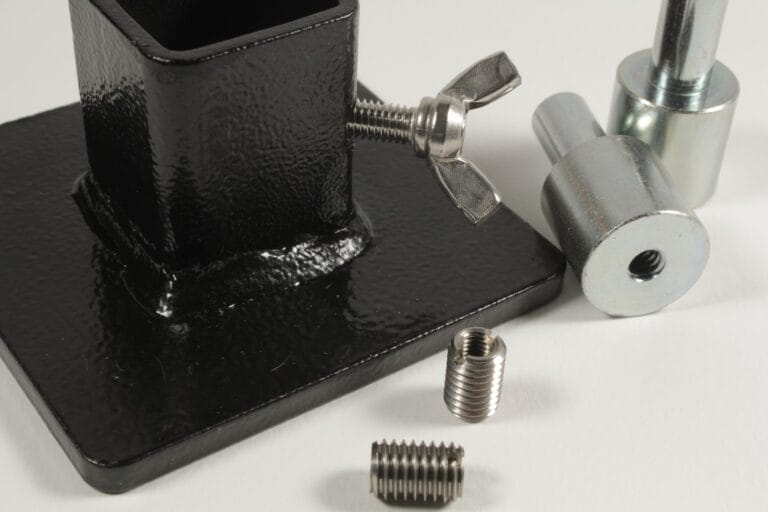
The Kevin Lee awl we stock uses a replaceable diamond blade, which covers both of the points below.nnnnReplacement blades
Some awl handles accept replaceable blades, which is useful because awl blades do dull with use, particularly on firm vegetable-tanned leather. A handle that takes standard blade fittings means you can replace just the blade rather than the whole tool, and carry a spare when doing production work.
Frequently asked questions
What does a leather awl do?
A leather awl opens stitch holes fully so a needle and thread can pass through cleanly. It is used after a pricking iron has marked the hole positions — the iron sets the spacing, the awl opens each hole just before it is stitched. On thinner leather the pricking iron may open the holes fully by itself; on thicker leather the awl is needed to complete the work.
How do you use a leather awl for stitching?
Push the awl through the leather at the pricking iron mark, rotating the handle slightly as you push to help the blade follow the mark cleanly. Push until the widest part of the taper has passed through, ensuring the hole is fully open. Remove the awl and stitch through immediately — work one hole at a time rather than opening all holes in advance, as this gives the cleanest results.
What type of awl blade is used for leather saddle stitching?
A diamond awl blade is the standard for hand saddle stitching on vegetable-tanned leather. Its tapered, lozenge-shaped profile opens a clean elongated hole that the thread fills neatly, and the stitch lies flat across the surface. Round awls open a circular hole and are less suited to the appearance of a typical saddle stitch line.
How do you sharpen a leather awl?
Awl blades can be sharpened on a fine leather strop loaded with polishing compound, or with a small slip stone. The bevel on each flat of the diamond blade should be maintained consistently. A stropped awl blade cuts through leather with significantly less effort than a new, unpolished blade from the packet — and much less than a dull one.