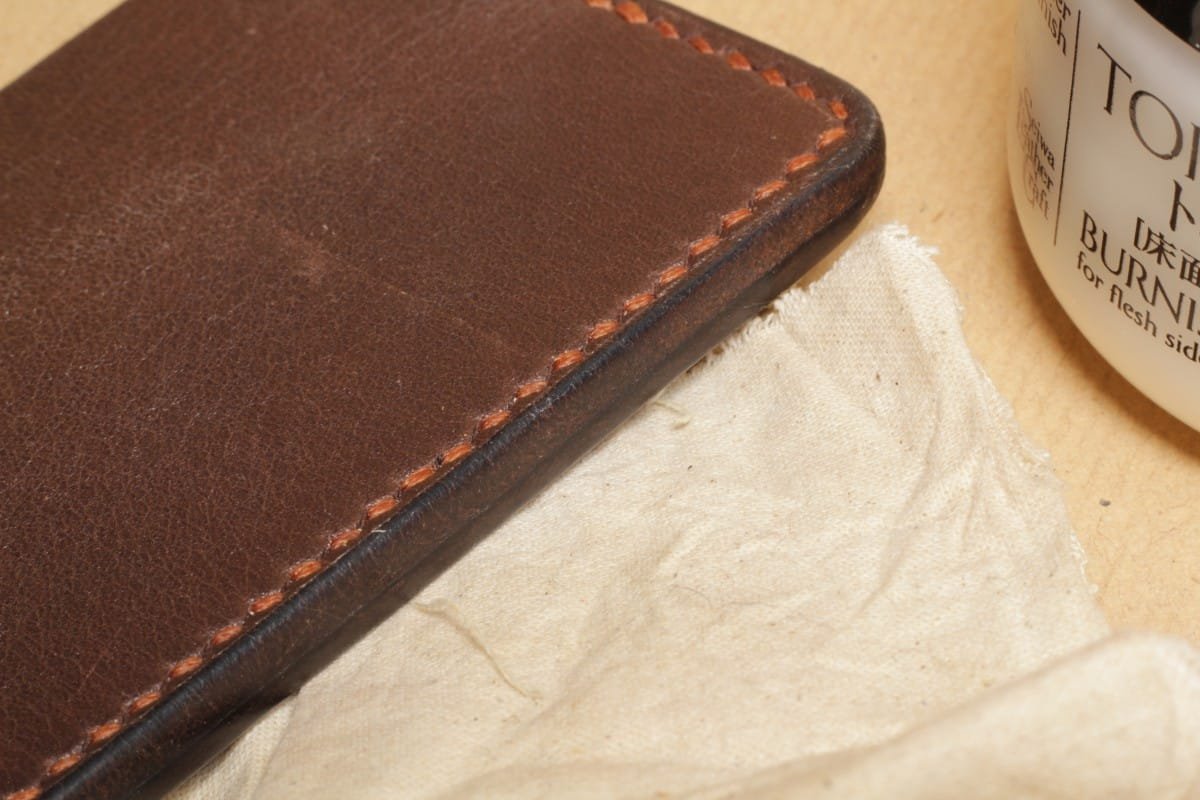
Edge Finishing for Beginners
Quick answer: Leather edge finishing is a five-step sequence: cut the edge cleanly, bevel both sides with an edge beveller, sand through progressively finer grits, apply a small amount of burnishing compound (Tokonole or Gum Tragacanth), and burnish with firm, consistent strokes. Each step prepares the edge for the next. Skipping the bevel step — the most common beginner mistake — makes a proper rounded finish impossible.
Looking for the tools or finish for a particular stage? Browse leather edge bevellers for preparing sharp cut corners, leather edge burnishers for smoothing prepared edges, or leather edge paint for a coated edge finish.
Edge finishing is the process of taking a raw-cut leather edge and turning it into something smooth, rounded, and clean. It is one of the most visible signs of quality in hand-made leather goods, and it is also one of the areas where preparation matters as much as the finishing product itself.
A poor edge is not fixed by applying more burnishing compound. A good edge comes from doing the right things in the right order.
Why edge finishing matters
The raw edge of cut leather is rough and fibrous. Left untreated, it will fray, scuff, and degrade over time. A properly finished edge is denser, more resistant to wear, and looks deliberate — the difference between a piece of leather and a properly made leather good.
Edge finishing also affects how a piece holds up in use. A burnished edge on a wallet or belt resists daily contact better than an unfinished one. A well-sealed edge on a bag strap maintains its structure for longer.
The edge finishing sequence
Edge finishing is a sequence, not a single step. Each stage prepares the edge for the next.
1. Cut the edge cleanly. This is the foundation. A rough, ragged cut edge is harder to finish than a clean one. Use a sharp blade, cut in a single deliberate pass if possible, and keep the blade perpendicular to the leather. A clean cut makes every subsequent step easier.
2. Bevel the edge. An edge beveller removes the sharp corner from the top and bottom edge of the leather. This is a small cut that rounds the corner slightly, which does two things: it removes the fibres that would otherwise fray first, and it creates the surface profile that allows the edge to burnish into a smooth, rounded shape rather than a flat-topped, square edge. Bevelling is the normal preparation when the intended result is a rounded, burnished edge. The amount removed and whether both sides are bevelled depend on the construction and which edges will remain visible.
3. Sand the edge. Wet and dry sandpaper — worked through progressively finer grits — smooths the cut edge and prepares the fibres for burnishing. Start with a medium grit to remove any roughness, move to a finer grit to smooth the surface, and work with a consistent stroke along the edge. The edge should feel noticeably smoother after sanding before any compound is applied.
4. Apply burnishing compound. Apply a small amount of Tokonole or Gum Tragacanth to the edge. These products are water-based compounds that dampen and bind the leather fibres, allowing them to be compressed under friction into a smooth, compact surface. Use less compound than you think you need. A small amount worked in properly does more than a heavy application that sits on the surface.
5. Burnish. Work the compound into the edge using a wooden burnisher or a smooth dowel, using firm, consistent back-and-forth strokes. The friction generates gentle heat, which helps the fibres compress and compact. You will feel and see the edge change as it is worked — it becomes firmer, smoother, and denser. Work in stages. Apply compound, burnish until it starts to dry slightly, then assess. Repeat if needed. Stop when the edge is compact and smooth — do not continue working a dry edge with force.
Common mistakes to avoid
Skipping the bevel step is the most common mistake and one of the hardest to recover from later. Applying too much compound is another — a soggy edge does not burnish cleanly and can take a long time to recover. Over-burnishing a dry edge can compress and damage the surface rather than smoothing it. The edge sequence is genuinely a sequence — each step is preparation for the next. Rushing or skipping any stage means the next one has more to compensate for.
Testing on scrap first
Different leathers respond differently to burnishing products and the amount of friction needed. Test your process on a scrap of the same leather before working on the final piece. It takes a few minutes and tells you exactly what the leather will do before it matters.
Frequently asked questions
How do you finish leather edges by hand?
Hand leather edge finishing follows a sequence: cut the edge cleanly, bevel both sides with an edge beveller, sand through medium and fine grit wet and dry paper, apply a small amount of Tokonole or Gum Tragacanth, and burnish with firm back-and-forth strokes using a wooden burnisher or smooth dowel. The friction compresses the fibres into a smooth, dense, rounded edge. Repeat the last two steps as needed.
What tools do you need to finish leather edges?
The core tools are: an edge beveller (to chamfer both sides of the edge), wet and dry sandpaper in medium and fine grits, a burnishing compound (Tokonole or Gum Tragacanth), and a wooden burnisher or smooth dowel. A sharp blade that cuts the initial edge cleanly is the essential starting point — the rest of the process depends on that cut being good.
Do you have to bevel leather edges before burnishing?
Bevelling is the normal preparation when the intended result is a rounded, burnished edge. The amount removed and whether both sides are bevelled depend on the construction and which edges will remain visible.
What is the best product for finishing leather edges?
Tokonole (made by Seiwa, which we stock) is the most widely recommended edge burnishing compound for vegetable-tanned leather. Tokonole is a widely used and predictable option for vegetable-tanned leather. Gum Tragacanth is the traditional alternative and also produces good results. The product matters less than the preparation — a properly bevelled and sanded edge will burnish well with either.
Ready to put this into practice? Browse our edge finishing supplies — Tokonole, Gum Tragacanth, and the burnishing tools to go with them. Or see the full Finishing the Edge workflow stage, from bevelling through to burnishing.