Choosing a Pricking Iron for Leatherwork
Quick answer: A stitching iron sets the spacing and hole profile for hand stitching. French-style irons produce the slim, slanted profile Magnus prefers for traditional saddle stitching, while diamond irons can produce a very similar stitch appearance and feel. Neither style is inherently better. Tooth sharpness, polish and consistency matter more than the label, and spacing should suit the leather, thread and intended look.
A pricking iron is one of the most important tools in hand leatherwork. It sets the stitch spacing and stitch line appearance before a single stitch is made. A poorly made iron leaves ragged, uneven holes that no amount of careful stitching can fully recover. A well-made iron produces clean, consistent marks that make stitching easier and the finished line look deliberate.
This guide covers what to look for when choosing a pricking iron and how different styles and spacings affect the work.
French style vs diamond style
The two most common pricking iron styles are French (slim, slanted tine tip) and diamond (angled, lozenge-shaped tip).
French-style irons produce the slimmer, slanted stitch profile Magnus prefers for traditional saddle stitching. He started with French irons and that remains his personal choice, rather than a claim that they are objectively better. Diamond irons use a different tooth profile but can produce a very similar stitch appearance and feel when the thread, spacing and technique are matched properly.
Diamond style irons produce a more distinctly angled, lozenge-shaped hole. The stitch angle tends to be more pronounced, and the resulting stitch line has a more slanted, layered appearance. Diamond style suits certain aesthetic preferences and is used widely in Japanese-influenced leatherwork. The holes are also slightly easier to see clearly during stitching.
Neither style is objectively superior. The choice is partly practical — what you are making and the leather weight — and partly a matter of the look you want in the finished piece.
Spacing: what the numbers mean
Pricking iron spacing refers to the distance from one tine (tooth) to the next, measured in millimetres. This determines how close together the stitches will be.
3mm is a fine spacing suited to thin and delicate leather and small goods such as watch straps and fine wallets. It produces a dense, refined stitch line and requires a finer thread to match. The holes are close enough together that consistency in punching becomes particularly important.
3.38mm is a popular fine-to-mid spacing that works well across a range of small goods and light bag work. It gives a refined look without being as demanding as 3mm, and it suits 0.55mm thread well on most vegetable-tanned leathers.
3.85mm is a mid-range French style spacing and the most versatile starting point for general hand leatherwork. It suits wallets, bags, notebook covers, and light structural work. It pairs well with both 0.55mm and 0.65mm thread and is forgiving enough for beginners to get consistent results without the tine spacing working against them.
4mm is a slightly wider spacing suited to medium-to-heavier leather — structured wallets, bag panels, and light belt work. It works well with 0.65mm thread and produces a clear, clean stitch line that suits the weight of the leather it is typically used on.
Wider spacings (5mm and above) suit heavy leather, belts, and structural work where a bold stitch line and heavier thread are appropriate.
Tine count: 2-prong, 4-prong, and beyond
Pricking irons are available in different tine counts. A 2-prong iron is used for marking the spacing at the start and end of a stitch line and around curves, where a longer iron cannot follow the shape cleanly. Multi-prong irons (4-prong, 6-prong, 8-prong, 12-prong) are used along the main stitch run.
A practical setup for most makers is a 2-prong iron for the start and curves, and a 4-prong or larger iron for the main run. Going much beyond 8 or 10 tines can make repositioning on the next pass more difficult without losing the spacing rhythm.
What makes a good pricking iron
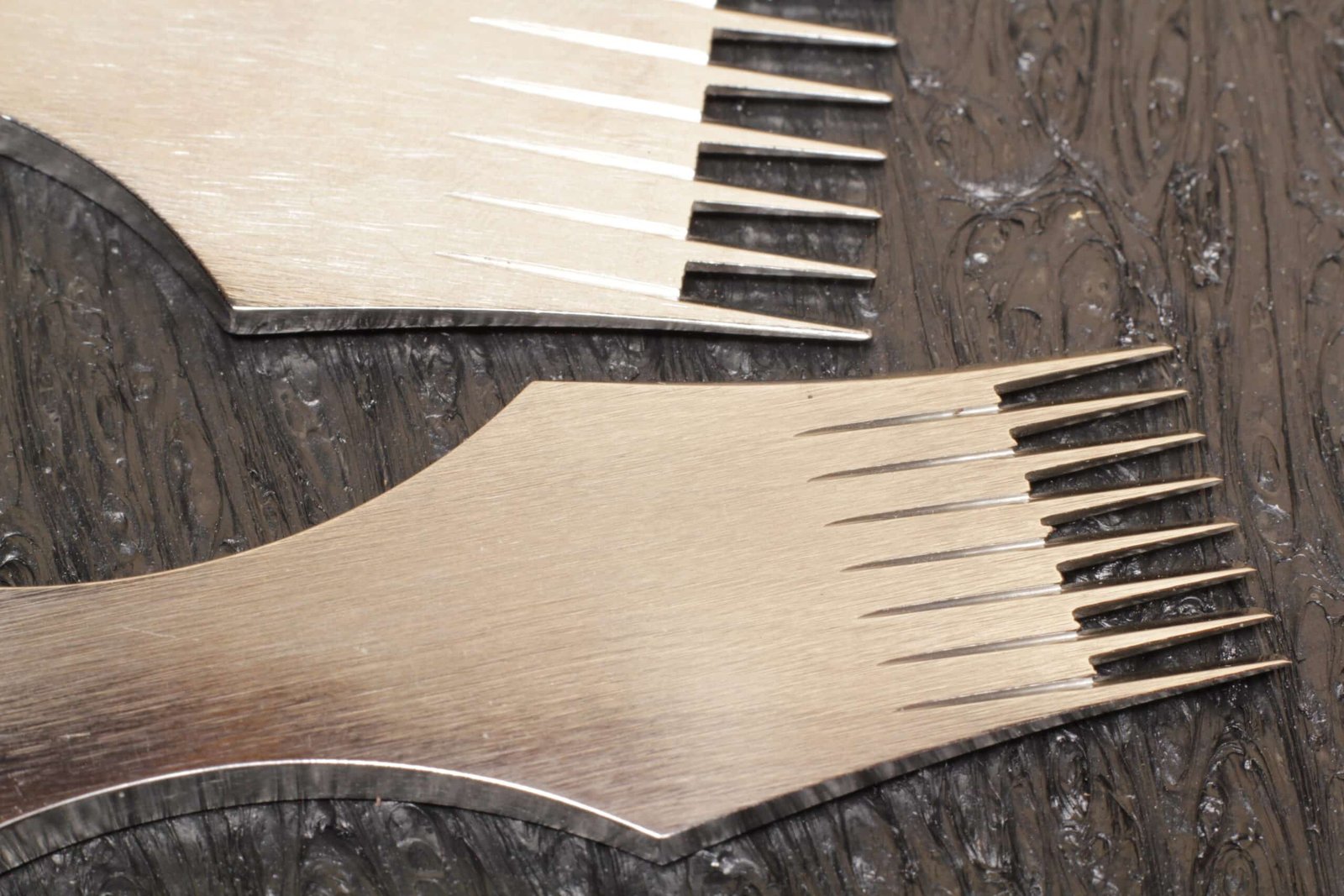
The tines should be even, sharp, and consistent in spacing. They should be properly hardened so they do not dull quickly. The body should be balanced so it does not tip forward or back under mallet impact. The finish should be smooth — rough or poorly ground tines tear leather fibres rather than piercing them cleanly.
Look at the tine tips before buying if possible, or buy from a supplier who can speak to the iron’s quality from experience. A good pricking iron should last many years of regular use if it is used correctly and not abused.
Currently stocked
We stock Kevin Lee French style pricking irons at 3.85mm spacing, along with pricking iron sets for makers who want a structured starting combination.
Frequently asked questions
What is a pricking iron used for in leathercraft?
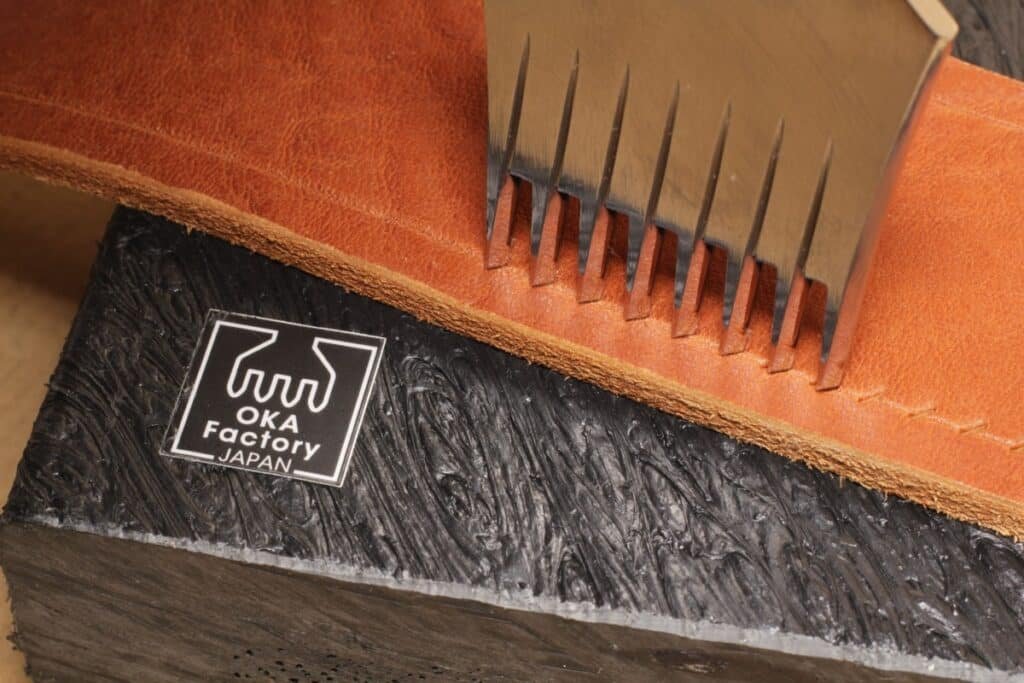
A pricking iron marks and opens the stitch holes in leather before hand stitching. Struck with a mallet, its tines pierce the leather at the set spacing, defining where each stitch will sit. The iron does not do the stitching — it creates the consistent hole pattern that makes even saddle stitching possible.
What is the difference between French style and diamond style pricking irons?
French-style irons produce a slimmer slanted opening, while diamond irons use a different tooth profile. Both can produce a similar saddle-stitch appearance when the thread, spacing and technique are matched properly. Magnus prefers French irons because they are what he learned with, not because one style is objectively better.
What pricking iron spacing should a beginner start with?
A 3.85mm French style iron is the most practical starting spacing for general hand leatherwork. It suits wallets, bags, notebook covers, and a wide range of small goods, pairs well with both 0.55mm and 0.65mm thread, and is forgiving enough for beginners to achieve consistent results. Finer spacings such as 3mm and 3.38mm suit thinner leather and more refined work; 4mm suits heavier leather and bolder stitch lines.
Do you need both a 2-prong and a multi-prong pricking iron?
Having both is worth it once you are working regularly. The 2-prong iron is used at the start and end of a stitch line and around curves where a larger iron cannot follow the shape cleanly. A 4-prong or larger iron is faster for the main stitch run. Starting with just a 4-prong iron is perfectly workable; add a 2-prong when curves and tighter shapes become part of your regular work.