Tokonole vs Gum Tragacanth – Which Should You Use?
When finishing vegetable-tanned leather edges, two products come up constantly: Tokonole and Gum Tragacanth.
Both compress fibres, smooth edges, and improve durability. Both can produce clean, professional results when the preparation is correct. The difference between them is often less dramatic than people make it sound — and the choice matters less than the sanding and bevelling that goes before either of them.
What Is Tokonole?
Seiwa Tokonole is a Japanese burnishing compound with a creamy, paste-like consistency that spreads easily with canvas, cloth, or a wooden slicker. It is widely used in modern leathercraft and for good reason — it is consistent, predictable, and produces a clean finish with relatively little effort once the prep is done properly.
It works particularly well when finishing both edges and flesh sides on the same piece, which makes it useful when you are also slicking the inside panels of a wallet or bag. Clean, modern, reliable.
Available in Clear, Black, and Brown. Clear is the most versatile — it works across all leather colours without altering the shade of the edge.
Seiwa Tokonole Burnishing Agent — 120g, Clear, Black and Brown
What Is Gum Tragacanth?
Gum Tragacanth is a traditional plant-based burnishing solution made from natural gum resin. It has been used in leatherwork for decades — long before synthetic alternatives existed — and it remains a genuinely good product for the work it was designed for.
For restoration work on older pieces it often feels more in keeping with the age and character of the leather. For pieces built in a deliberately traditional style, where the process and materials are part of what you are communicating, it suits that aesthetic in a way Tokonole does not quite replicate.
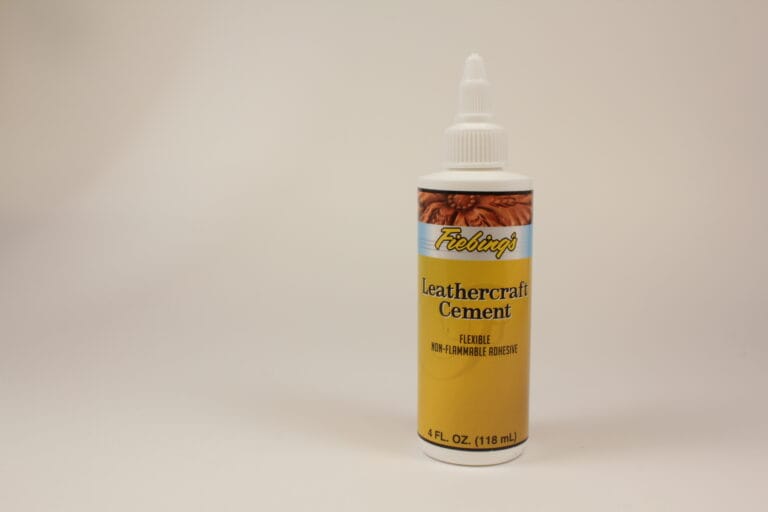
Fiebing’s Gum Tragacanth — 118ml
How to Apply Tokonole
Preparation must be done first. Tokonole applied to a poorly sanded edge will not rescue it.
Sand through your full grit progression — 240, 400, 600, dampen, 800, dampen, 1000. Bevel both sides. Then apply a small amount of Tokonole to the edge with a fingertip or canvas scrap. You do not need much — a thin even layer is better than a heavy one. Burnish immediately while still wet, working back and forth with moderate pressure. As it begins to tack and dry, increase pressure slightly. On better pieces let it dry fully, sand lightly at 1000 grit, and do a second thin coat with a final burnishing pass.
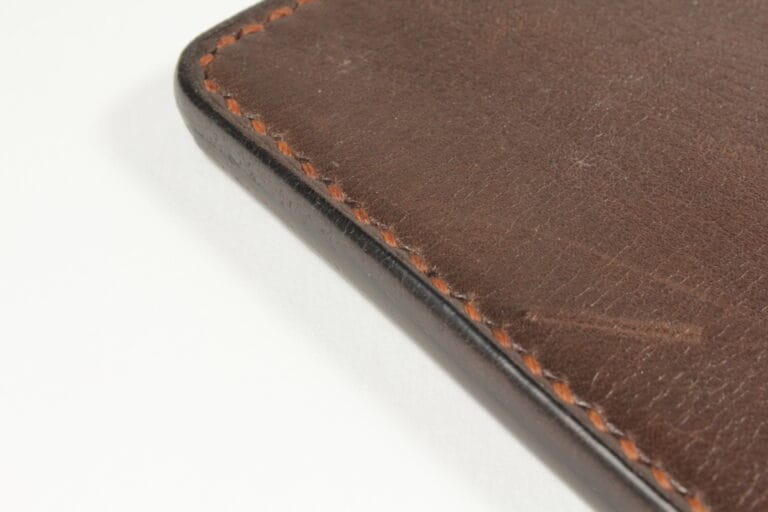
The edge is ready when it feels smooth and slightly glassy with no raised or fibrous areas.
How to Apply Gum Tragacanth
Very similar process, but Gum Tragacanth has a slightly shorter working window before it begins to set. Work in sections on longer pieces rather than trying to cover everything at once.
Sand and bevel first. Apply a small amount with a fingertip or cloth and begin burnishing immediately — Gum Tragacanth benefits from being worked quickly once applied. Firm, rhythmic strokes along the edge. Allow to dry, inspect, and do a second pass if needed.
Are the Results Actually Different?
In my experience, when both are applied properly, they can produce very similar edge results. Most people holding the finished piece would not know which product was used.
Where they differ in character: Tokonole tends toward a slightly smoother, more refined surface. Gum Tragacanth has a slightly different texture — less modern, more natural. The distinction is subtle and matters more to the maker than to anyone else.
When I Use Each
On modern pieces using polyester thread, I usually reach for Tokonole. On traditional builds using linen thread, Gum Tragacanth. When repairing or restoring older work, Gum Tragacanth — it aligns better with the age of the piece. When slicking larger internal surfaces like wallet panel linings, Tokonole is easier and more consistent.
Neither is better. They suit different work and different aesthetics.
Frequently Asked Questions
Does Tokonole work on chrome-tanned leather?
Not reliably. Chrome-tanned leather does not compress in the same way as vegetable-tanned leather. For chrome-tan edges, use a paint-on finish like Fiebing’s Edge Kote instead.
How much Tokonole should I apply?
Very little. A thin even coat applied with a fingertip or canvas scrap is better than a heavy application. Too much can cause the finish to crack or lift over time.
Can you use Tokonole on the flesh side of leather?
Yes — this is one of its strengths. It slicks the flesh side cleanly and evenly, which is useful inside wallets and bags where you want a smooth interior surface.
Is Gum Tragacanth better than Tokonole?
Neither is better. Tokonole is more versatile and consistent. Gum Tragacanth has more traditional character and suits certain builds better. The choice comes down to the project and your preference.
What grit sandpaper before applying either compound?
240, 400, 600, dampen, 800, dampen, 1000. The edge must be smooth and free of fibre before compound goes on.
Do you need both?
Not necessarily. Most makers end up with a strong preference for one or use each for different work. If you could only keep one, Tokonole is more versatile. But Gum Tragacanth earns its place on the bench for traditional builds.