Professional Leather Working Tools UK – What Every Maker Needs
There is a question that comes up constantly from people starting out in leathercraft.
Not which technique to learn first. Not which project to begin with. Which tools do I actually need?
It is a fair question, and the honest answer is: fewer than most people think, but the right ones matter more than most people realise. This is not a list of everything available. It is a guide to what belongs on the bench from the start — and why.
The Stitching Tools
Hand stitching is the foundation of traditional leatherwork. Everything else supports it.
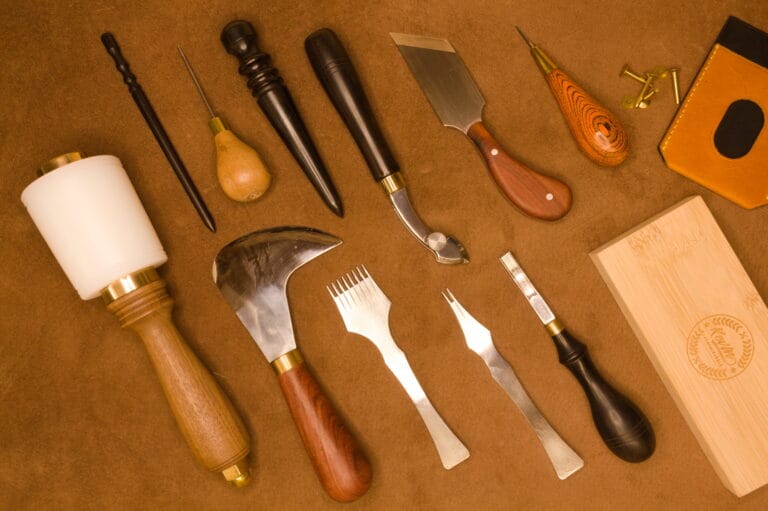
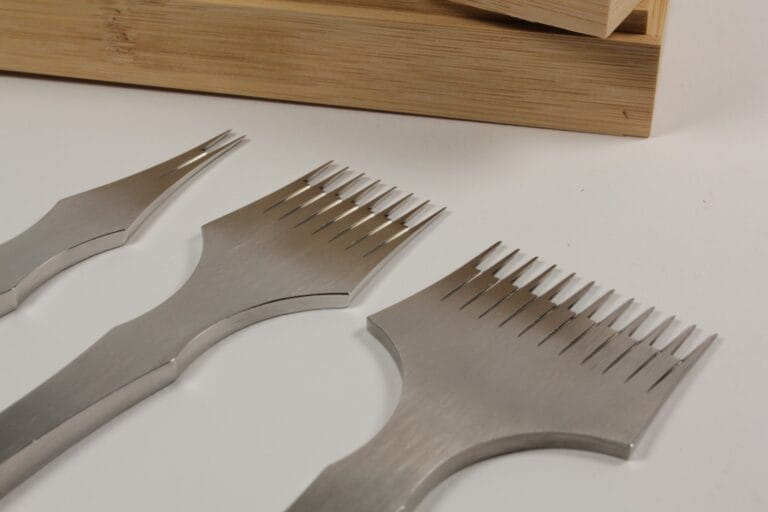
The pricking iron sets your stitch spacing. It needs to be consistent, sharp, and tall enough to hold vertically before you strike. Cheap irons often have inconsistent spacing between teeth — something you will not notice until you are halfway through a seam. The Kevin Lee pricking irons I stock are the ones I use myself. That is why I chose them.
A wing divider comes before the iron. It scribes your stitch line by following the outer edge of the leather — consistent, repeatable, and fast once you have practiced it for ten minutes. Skipping this step and trying to eyeball the line shows in the finished work.
The awl opens and angles each hole after the iron has punched through. It controls how the stitch sits in the leather. Most makers underestimate how much difference good awl work makes to the appearance of the finished seam.
Thread and needles complete the picture. For most work, 0.55mm waxed polyester thread paired with John James size 002 or 004 harness needles is a reliable starting point. Match the thread to the iron spacing — they work as a system, not independently.
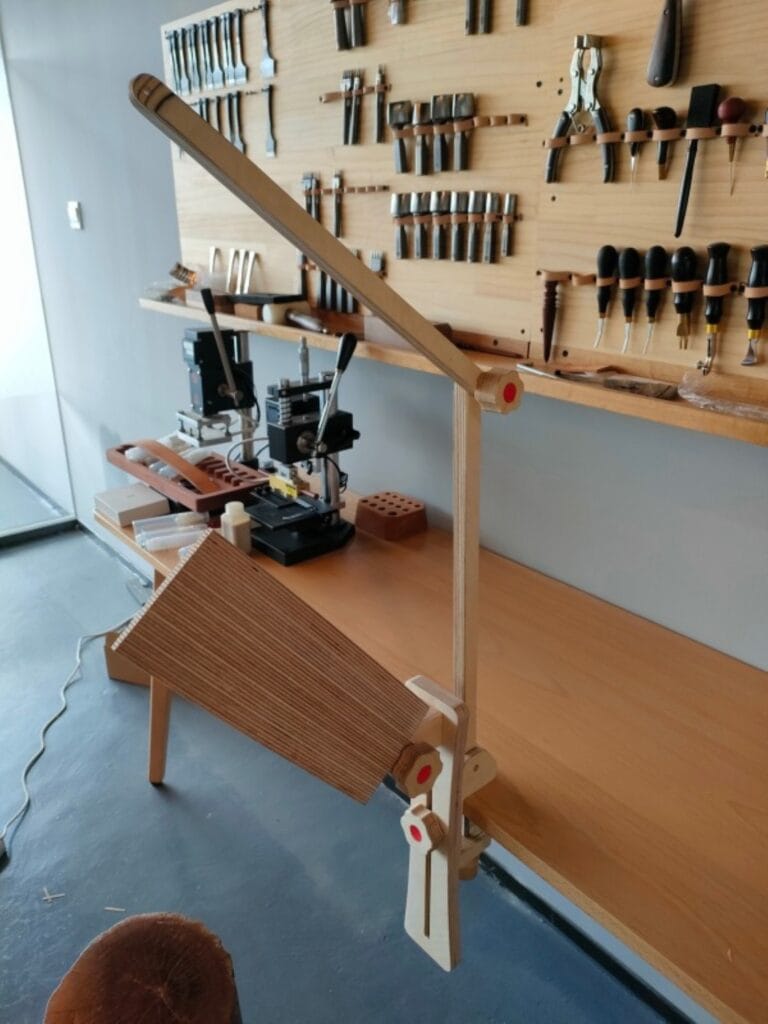
A stitching pony holds the work while both hands stitch. Without one, tension is inconsistent and the work shifts. It is one of those tools that feels unnecessary until you use one properly — and then you cannot understand how you managed without it.
Browse Kevin Lee pricking irons · Artisan Soul waxed thread · John James harness needles · Kevin Lee stitching pony
The Cutting Tools
A sharp knife is not optional. It is the tool you will use more than any other, and a dull blade is both dangerous and destructive — it drags through leather rather than cutting it, and the result shows on every edge.
Stropping is part of the routine, not occasional maintenance. Keep the blade sharp. Work with the leather rather than against it.
A skiving knife thins leather at folds and joins — wallets, straps, folded edges. Poor skiving creates bulk where there should be none. Clean skiving allows layers to sit naturally and stitching to follow without fighting the material.
Kevin Lee full-tang skiving knife — left and right-handed
The Edge Tools
Clean edges are the mark of a finished piece. Rough or fibrous edges undermine work that is otherwise well made.
An edge beveller removes the sharp corner from both sides of the leather before burnishing. The size you choose is down to preference and the look you are after — a smaller size gives a subtle, refined bevel that suits fine work and small goods, while a larger size gives a more pronounced rounded edge that suits heavier or more rustic work.
Tokonole or Gum Tragacanth compresses the fibres and seals the surface. Neither product compensates for poor preparation — the sanding and bevelling must be done correctly first. The compound enhances preparation, it does not replace it.
Kevin Lee edge bevellers · Seiwa Tokonole · Fiebing’s Gum Tragacanth · Ebony burnisher sticks
Adhesives
Leather cement holds layers in alignment while you mark, punch, and stitch. It is not a substitute for stitching — it is what keeps everything still long enough to stitch it properly. Fiebing’s Leather Cement has a forgiving working time that suits complex builds and makers still developing their alignment eye.
Fiebing’s Leather Cement at Hideout Craft
Building a Kit That Lasts
The temptation when starting out is to buy everything at once, or to buy the cheapest version of everything to minimise risk. Neither approach serves you well.
Buy fewer tools and buy them properly. A quality pricking iron, a sharp knife, reliable thread, a beveller, and a burnishing compound — that is a functional kit. It will produce good work. It will last.
Expand from there as your projects demand it. Add a skiving knife when you need it. Add a stitching pony when the absence of one starts costing you consistency. Add a wing divider early — it is essential for stitch line quality and most people add it too late.
Tools should solve problems you have already encountered, not problems you are anticipating. The craft rewards patience. So does building the kit.
Explore the full range of leathercraft tools and supplies at Hideout Craft
Frequently Asked Questions
What are the essential leather working tools for a beginner in the UK?
Start with a pricking iron set, an awl, a sharp knife, waxed thread, harness needles, an edge beveller, and a burnishing compound such as Tokonole. Add a stitching pony early — it transforms stitch quality. A wing divider for scribing stitch lines is essential and often overlooked.
What are professional leather working tools?
Professional leathercraft tools are built to consistent tolerances, designed for extended regular use, and perform reliably across a range of leather types and thicknesses. The difference from hobbyist-grade tools shows most clearly in pricking irons — consistent spacing across all teeth over a long seam — and in cutting tools that hold an edge properly. Kevin Lee tools are widely regarded as genuinely professional quality within the craft.
Is it worth buying quality leather tools as a beginner?
Yes — particularly for the tools you use every session. A pricking iron with inconsistent spacing produces a seam that looks inconsistent regardless of how careful your technique is. A dull or poorly balanced knife fights you rather than working with you. Starting with quality tools means your results accurately reflect your developing technique, rather than being masked by equipment problems.
What pricking iron is best for beginners in the UK?
3.85mm pitch covers most projects and is the right spacing to learn on. It is forgiving enough to work with while your technique develops, and produces a seam that looks genuinely refined. Kevin Lee 3.85mm irons are what I use and stock — a 2-tooth and 8-tooth pair handles the vast majority of what you will make.
Where can I buy professional leather working tools in the UK?
Hideout Craft stocks a curated range of professional-grade tools for traditional hand leatherwork — including Kevin Lee pricking irons, awls, edge bevellers, skiving knives, and stitching ponies, alongside consumables including Tokonole, Gum Tragacanth, waxed thread, John James needles, and Fiebing’s dyes and finishes. All stocked in the UK with UK delivery.
Browse the full range of professional leatherworking tools and leathercraft supplies stocked in the UK at Hideout Craft.