Finishing Leather After Dyeing
Quick answer: After dyeing vegetable-tanned leather, allow it to dry fully, buff the surface lightly with a clean cloth, then apply Fiebing’s Resolene (a water-based acrylic sealant) in thin, even coats. Once the sealant is dry, condition the leather to restore suppleness. This seals the dye against transfer and surface abrasion, and protects the leather in use. Do not condition before sealing.
Dyeing is not the final step in treating leather. Once dye has been applied and the colour has set, the leather typically needs to be finished and sealed to protect the dye, restore suppleness, and prepare the surface for use. Skipping this stage leaves the dye vulnerable to bleeding, fading, and uneven wear.
This guide covers the finishing sequence after dyeing and what each product does.
Why finishing matters after dyeing
Alcohol-based leather dyes penetrate the leather fibres and become permanent once dry, but the dye is not sealed or protected simply by being in the leather. Without a finish:
– The dye can transfer to skin, fabric, or other surfaces, particularly when new and from the surface layer
– The leather can feel slightly dry or stiff from the dye process
– The surface is unprotected from moisture and abrasion
– The colour may fade faster under regular use
A proper finishing sequence addresses all of these.
Step one: allow full drying time
Before applying any finish, the dye must be completely dry. Depending on the dye product, the number of coats applied, and the ambient conditions, this typically means allowing the leather to dry naturally for at least several hours. Do not rush this with artificial heat. If the leather still smells strongly of alcohol solvent, it is not ready for the next stage.
Step two: buff the surface
Once dry, buff the leather surface lightly with a clean, dry cloth. This removes any excess dye that is sitting on the surface rather than absorbed into the fibres, and helps even out the surface before sealing. This light buffing step is particularly useful after multiple coats of dye.
Step three: apply a leather finish or sealant
Fiebing’s Resolene is a water-based acrylic top coat designed for use over leather dye. It seals the dye, provides a light protective layer against moisture and light abrasion, and gives a slightly glossy, firm finish. It can be diluted with water for a thinner application or a less glossy result.
Apply Resolene thinly with a wool dauber, sponge, or soft cloth. Work in even strokes and avoid over-application, which can cause the finish to sit on the surface unevenly and dry with a blotchy appearance. A thin, even coat is better than a heavy one.
Allow to dry fully between coats. Two thin coats typically provide adequate protection for most leatherwork. Three coats suit pieces that will see heavy use.
Resolene gives a slightly more formal, slightly glossy finish. If a less processed look is preferred, it can be applied in thinner coats and the final coat buffed with a clean cloth while still slightly tacky to reduce the gloss.
Step four: condition the leather
After the sealant has dried fully, a leather conditioner helps restore any suppleness lost during the dyeing process. Alcohol-based dyes can leave the leather slightly drier than before, and a conditioner — applied sparingly and buffed in — brings the leather back to a usable, flexible state.
Do not condition before sealing. The conditioner should go on after the protective finish has been applied and dried, not before — conditioning first can reduce the adhesion of the sealant.
Dye bleeding test
Before using a freshly dyed and finished piece against light-coloured fabric or skin, it is worth doing a simple bleed test: rub a white cloth firmly over the dyed surface. A small amount of colour transfer on the first few rubs is normal for freshly dyed leather. Heavy, persistent colour transfer means the surface has not fully set and may need an additional coat of finish or more drying time.
Edge finishing after dyeing
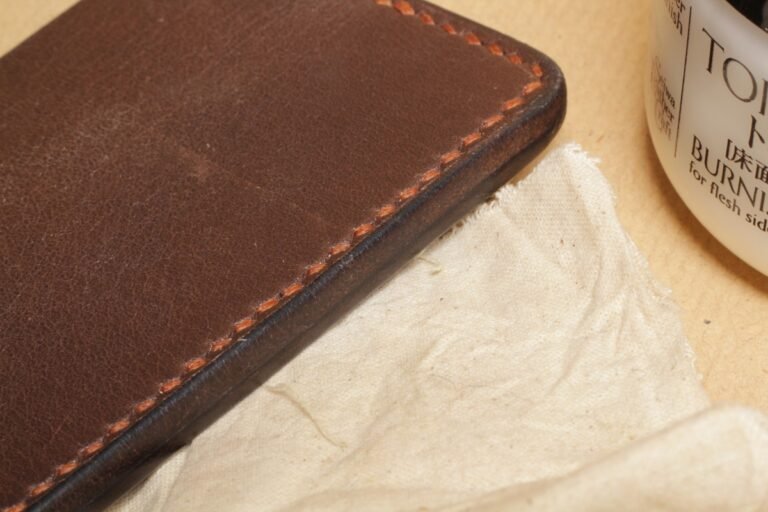
If the edges are being dyed to match, dye the edges after the main surface is finished. Apply edge dye or use an edge finishing product after the main surface coat has dried. Burnish the edges if using a burnishing compound, or apply edge paint for a more sealed, hard-wearing edge finish on pieces where the edge will see regular contact.
Frequently asked questions
What do you put on leather after dyeing?
After dyeing and allowing full drying time, apply Fiebing’s Resolene as a sealant — a thin, even coat using a wool dauber or sponge. Allow to dry fully, then apply a leather conditioner to restore suppleness. The Resolene seals the dye and provides a protective layer against moisture and surface abrasion; the conditioner addresses any stiffness introduced by the dye process.
How do you seal leather dye?
Fiebing’s Resolene is the standard sealant for alcohol-based leather dye. Apply thinly with a dauber or sponge in even strokes, allow to dry between coats, and apply two to three coats for adequate protection. Resolene is water-based and can be diluted for a thinner application or a less glossy result. Allow the dye to dry completely before applying any sealant — sealing over wet dye produces poor adhesion.
Does leather dye need to be sealed?
Yes. Without a sealant, freshly dyed leather can transfer colour to skin, fabric, and other surfaces. The dye itself is permanent in the leather, but the surface layer is not protected without a top coat. A sealant also protects the leather surface from moisture and abrasion in use. Sealing is not optional if the piece will be used against skin or light-coloured materials.
How do you stop leather dye from transferring onto skin or fabric?
Apply Fiebing’s Resolene over the fully dried dye in thin, even coats. Allow to dry fully between coats and apply at least two coats before use. Do a bleed test by rubbing a white cloth firmly over the finished surface — a very small amount of colour transfer on the first few rubs is normal; heavy or persistent transfer means the surface has not fully set and needs an additional coat of sealant or more drying time.