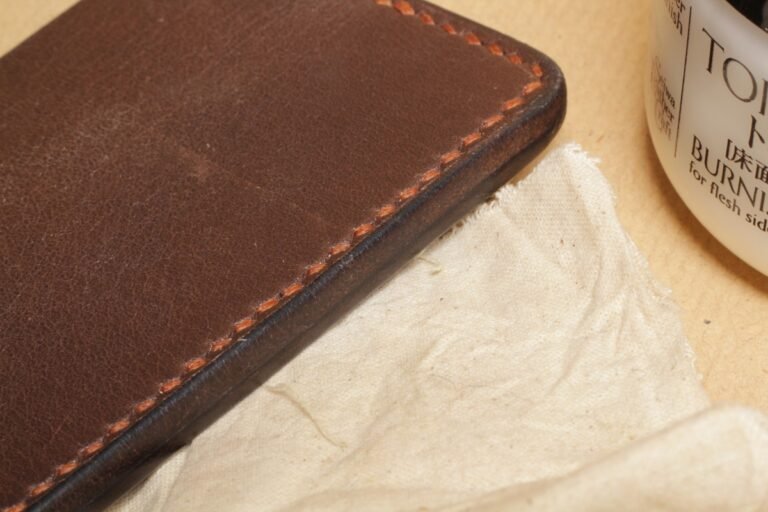
Common Leather Edge Finishing Mistakes and How to Fix Them
Quick answer: The most common leather edge finishing mistakes are skipping the bevel step (which leaves a flat, square edge that won’t burnish into a rounded profile), applying too much burnishing compound, and not sanding properly before burnishing. Most edge problems trace back to preparation rather than the wrong product. Fix each issue by going back to the relevant preparation stage, not by applying more compound on top.
Edge finishing is one of the clearest indicators of quality in hand-made leather goods, and it is also one of the areas where problems can be traced back to specific, fixable causes. This guide covers the most common mistakes and what to do about each of them.
The edge is not smooth even after burnishing
Likely cause: The edge was not sanded properly before burnishing compound was applied, or the cut edge was rough to begin with.
Burnishing compound works by binding and compressing leather fibres, but it cannot smooth an edge that has not been prepared. If the cut is ragged, the fibres are splayed, or the bevel step was skipped, the compound has poor material to work with.
Fix: Start again from the sanding stage. Re-sand the edge through medium and fine grit wet and dry paper, working consistently along the edge. Bevel if you have not already done so. Then re-apply compound and burnish.
The edge looks flat and square, not rounded
Likely cause: The edge was not bevelled before burnishing.
An edge beveller removes the sharp corner from both sides of the leather edge — top and bottom. Without this step, the edge remains square-profiled. Burnishing compound can smooth a square edge, but it cannot reshape it into a rounded profile because the material is not there to form a curve.
Fix: Use an edge beveller on both the top and bottom edges. Even on a previously worked edge, a light bevel pass will improve the profile. Re-sand lightly to smooth the fresh bevel, then re-apply compound and burnish.
The edge looks blotchy or uneven in colour
Likely cause: Too much compound was applied unevenly, or the compound was applied to an incompletely dried edge from a previous application.
Tokonole and Gum Tragacanth are water-based. Applied too heavily, or applied before a previous coat has dried, they can cause uneven absorption that shows as patchy colour or uneven finish.
Fix: Allow the edge to dry fully. Sand lightly to even the surface, then re-apply compound very sparingly — less than you think you need — and burnish immediately before it dries on the surface.
The burnishing is not compressing the edge
Likely cause: Either the compound has dried before you worked it in, or the leather is chrome-tanned rather than vegetable-tanned.
Burnishing depends on the compound dampening the fibres so they can be compacted under friction. If the compound dries before burnishing, the surface becomes tacky rather than workable. Chrome-tanned leather has a different fibre structure that does not respond to burnishing in the same way as vegetable-tanned leather.
Fix: If the compound has dried, apply a very small amount of water to the edge to re-dampen it slightly, then burnish quickly. If the leather is chrome-tanned, burnishing is not the right finishing method — edge paint or a sanded and waxed finish is more appropriate.
The edge is pilling or balling up
Likely cause: Too much compound, or burnishing with too much pressure on an already-dry edge.
Over-application creates a surface layer of compound that has not penetrated the fibres. Working this with a burnisher just moves it around and balls it up rather than compressing the fibres underneath.
Fix: Allow to dry fully, then use fine sandpaper to remove the surface residue and re-expose the leather fibres. Start again from a light, fresh application of compound.
The bevel cut is not clean
Likely cause: The edge beveller blade is dull, or the tool is being pushed without enough pressure to let the blade cut cleanly.
A sharp edge beveller should lift a thin strip of leather cleanly off the corner with a firm, consistent stroke. If it is dragging, catching, or producing a ragged cut, the blade needs attention.
Fix: Strop the edge beveller blade on a leather strop loaded with compound to restore the edge. A few strokes are usually sufficient. If the blade is damaged or the bevel cut has remained poor despite stropping, the blade may need replacement.
The edge looks good immediately but rough after a short time
Likely cause: The leather type does not burnish well, or the edge was not given enough time to fully dry and set between stages.
Some leathers — particularly those that are softer, more oily, or treated with certain finishes — do not hold a burnished edge as well as firm, natural vegetable-tanned leather. The process may need more stages or a different finishing approach for these leathers.
Fix: Allow each stage to dry fully before moving to the next. On problematic leathers, an edge dye or sealant may produce better long-term results than burnishing compound alone.
Frequently asked questions
Why won’t my leather edge burnish smoothly?
The most likely cause is insufficient preparation — either the edge was not sanded properly before compound was applied, or the bevel step was skipped. Burnishing compound binds and compresses fibres; it cannot smooth an edge that has not been prepared first. Go back to the sanding stage, work through medium and then fine grit, and apply compound only once the edge feels noticeably smooth.
Why does my leather edge look flat and square after burnishing?
The edge was not bevelled. An edge beveller removes the sharp corner from both sides of the leather edge and creates the chamfered profile that burnishing can compress into a rounded shape. Without this step, the edge remains square in profile regardless of how much compound is applied. Use an edge beveller on both the grain and flesh side, re-sand lightly, and then re-apply compound and burnish.
Why is my burnishing compound pilling or balling up on the edge?
Too much compound was applied, or the edge was being worked with the compound already dry. Tokonole and Gum Tragacanth need to be worked in while still slightly damp — once dry, the surface layer just moves around under the burnisher rather than compressing the fibres underneath. Allow to dry fully, use fine sandpaper to remove the surface residue, and start again with a much smaller amount of compound.
Why does my leather edge look rough after a short time in use?
This can happen when the edge was not properly finished through all stages — particularly if the bevel was shallow or sanding was insufficient — and the fibres were not fully compacted during burnishing. It can also happen on softer or more oily leathers that do not burnish as well as firm, natural vegetable-tanned leather. Ensure all stages are completed fully, and allow adequate drying time between coats of compound.